

Yiran Chen and Hai “Helen” Li Receive Numerous Awards at Design Automation Conference
Five honors from ACM and IEEE groups highlight Duke ECE leaders’ lasting influence on AI hardware research.
Award will support the pursuit of robotically assembled metamaterials in space for radar systems enabling long-range situational awareness.
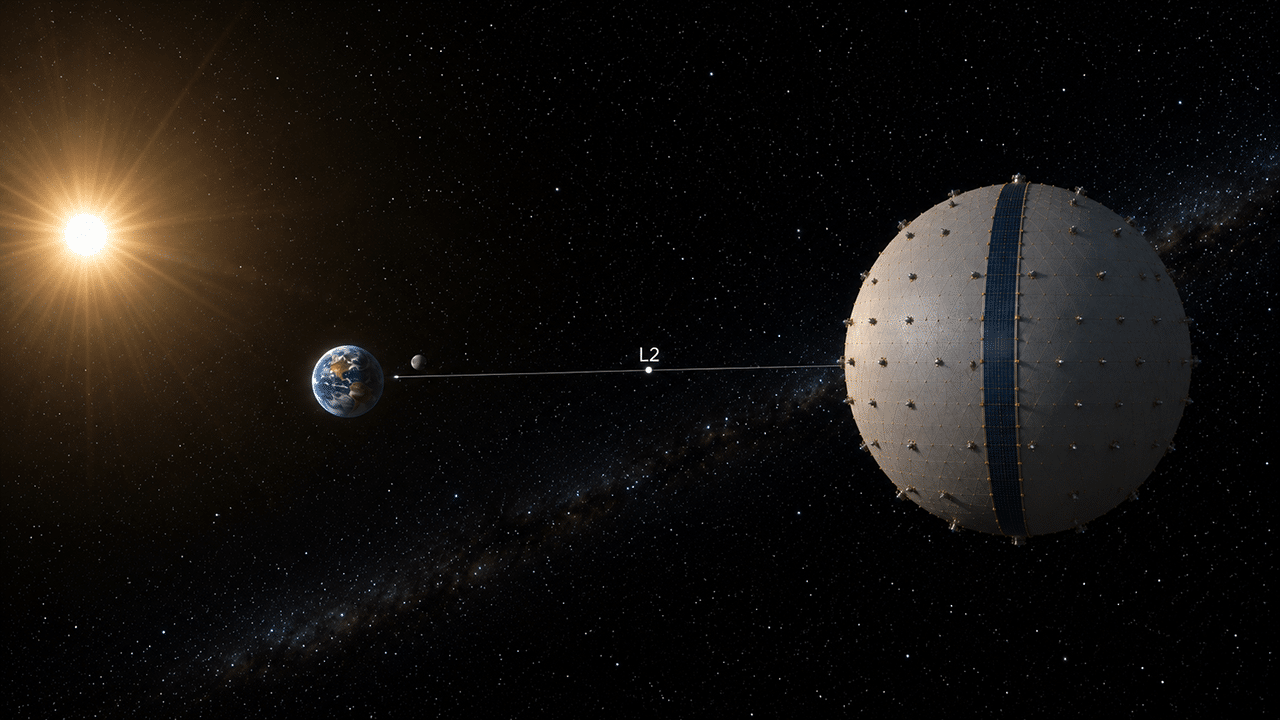
Duke Engineering’s David Smith, the James B. Duke Distinguished Professor of Electrical and Computer Engineering, has been selected as a 2026 NASA Innovative Advanced Concepts (NIAC) fellow.
One of the original inventors of metamaterials and a continued pillar in the field, Smith will seek to address a growing challenge in space situational awareness: monitoring the increasing population of satellites and other objects in space.
Metamaterials are essentially engineering materials that receive unusual properties through their structure rather than just their chemistry. For example, a coil of copper wire with a magnet rotating inside will create an electric current, whereas a straight copper wire won’t. Or a smooth sheet of silver is reflective, while a surface coated with tiny silver spheres is black.
Smith’s specialty is electromagnetic metamaterials, which use small repeating cells containing short arrangements of wires that interact with incoming light waves such as radio waves or infrared waves to bend, focus or absorb them. Moving far beyond a fundamental scientific discovery, Smith has pushed this work into more than 10 successful startups that have received over $1 billion in funding ranging from programmable flat antennas to devices that can see into the interior of your walls.
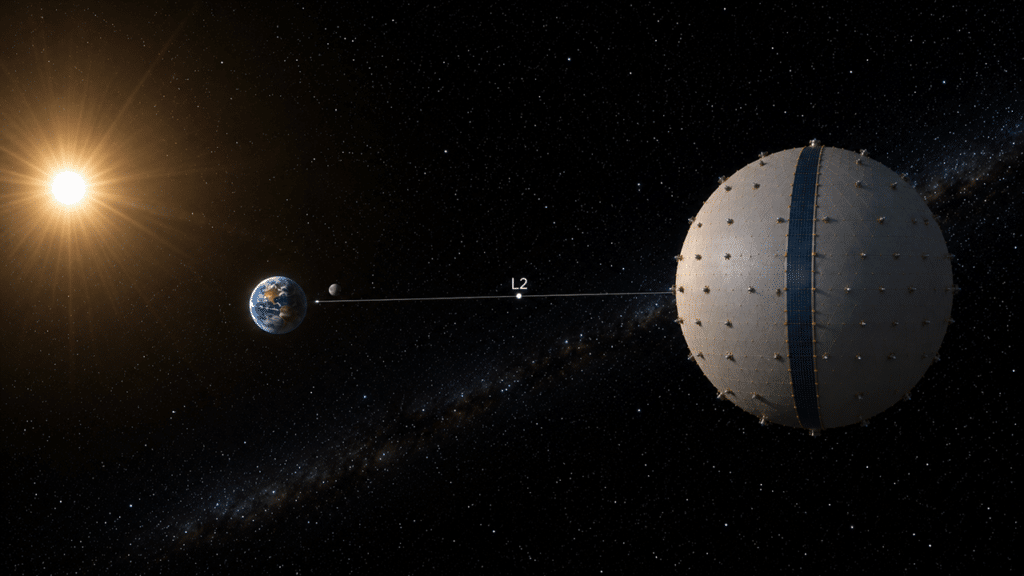
In this application, the metamaterials will act like sensors to track objects in space. Existing ground-based radar systems can track objects in low Earth orbit, but the distances involved in monitoring activity beyond low Earth orbit—including the increasingly important cislunar environment—make extremely large ground-based radar arrays impractical. Because radar performance improves with larger apertures, space-based systems could provide significant advantages, but conventional deployable antennas are constrained by the size of a rocket’s launch fairing.
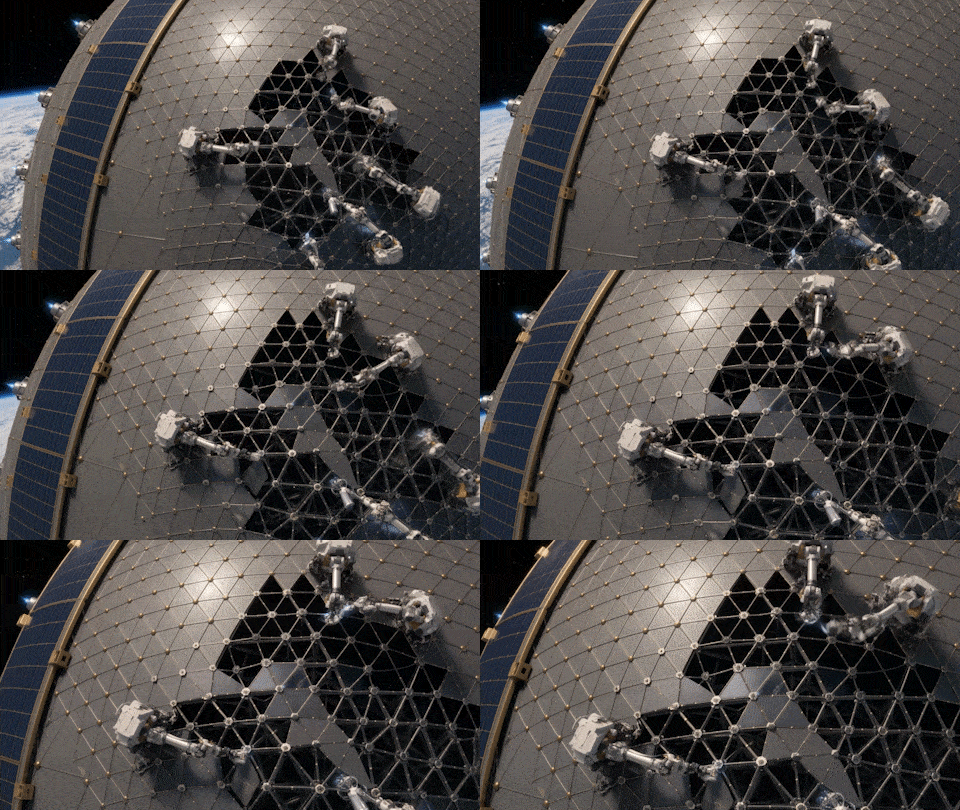
Smith’s concept offers a different approach: rather than launching a complete, massive antenna, robots would assemble a radar system in space from modular components. The system would combine robotically assembled, mechanically stable structures with reconfigurable electromagnetic metamaterials. The modular architecture could allow radar apertures to scale far beyond the dimensions of conventional deployable antennas while providing wide-field beam steering without mechanically moving the antenna. The work draws on NASA’s Automated Reconfigurable Mission Adaptive Digital Assembly Systems (ARMADAS) project, which is developing technologies for robotic assembly of large structures in space.
Working with Smith on the project as a co-principal investigator is Christine Gregg, a reserach engineer at NASA Ames Laboratory. If successful, the concept could provide a new way to monitor objects in space, including debris and other spacecraft, while also enabling applications beyond space situational awareness such as low-frequency Earth observation and deep-space communications.
NASA’s NIAC program supports visionary, technically credible ideas that could transform future missions by enabling radically better or entirely new aerospace concepts. The program provides researchers with multiple phases of funding to explore the feasibility of concepts that could change what is possible in space exploration. The first phase provides up to $225,000 for nine months of study, with successful concepts eligible to compete for subsequent funding.
Five honors from ACM and IEEE groups highlight Duke ECE leaders’ lasting influence on AI hardware research.

Kip Coonley, a faculty member of mechanical engineering and materials science (MEMS) and electrical and computer engineering (ECE), received a fellowship to create electromechanical teaching aids.
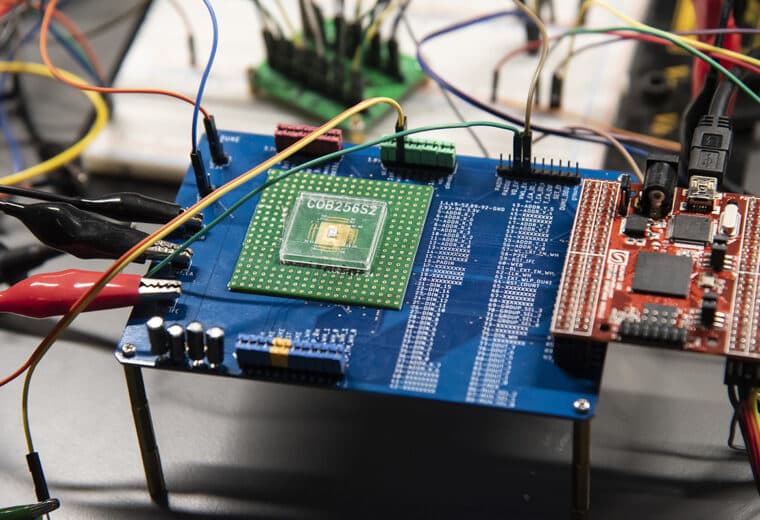
Duke engineers are leading a Phase 1 Genesis project funded by the Department of Energy to develop robotic AI processing hardware 10x faster and 100x more efficient than today’s top performers.