This year’s winners include Yiran Chen, the John Cocke Distinguished Professor of ECE and director of the NSF AI Institute for Edge Computing Leveraging Next Generation Networks (Athena), and Helen Li, chair and the Marie Foote Reel E’46 Distinguished Professor of ECE for their foundational work on magnetic random access memory (MRAM).
As electronic devices increased in power while decreasing in size throughout the early 2000s, they began running into a memory problem. From smart phones to smart watches and thousands of other small devices, reliably saving data while the device was turned off became challenging.
The reason is straightforward. Data in these devices are processed and stored through the movements of electrons, which represent the 1s and 0s ubiquitous to all digital programming. And keeping electrons where you want them requires space and energy, leading to drained batteries and unreliability when trying to miniaturize the technology.
To overcome this, researchers began looking into using magnetic materials to store data instead. Once programmed into a 1 or 0, these magnetic bits could remain stable without the need for continued power. Integrating them into existing electronic processors, however, remained a challenge.
We showed that the MRAM technology should mature within the next decade and be able to be used on commercial microprocessors.
Yiran ChenJohn Cocke Distinguished Professor of ECE
For starters, the technology was slower than its electric counterpart, and memory access speed is critical to the performance of modern computers.
In the early 2000s, Chen and Li were recruited into an “advanced technology group” within industry giant Seagate Technology to solve the problem. Moving from Silicon Valley to Bloomington, Minnesota, they quickly began working with colleagues at Penn State on solutions.
In 2008, Chen, Li and their colleagues published a paper titled “Circuit and microarchitecture evaluation of 3D stacking magnetic RAM (MRAM) as a universal memory replacement.” The research showed that, because the MRAM components were one-quarter the size of those they were replacing, their slower access was a non-issue if the memory hierarchy was properly designed. The paper also suggested a 3D architecture in which the MRAM components could be fabricated independently and then stacked on top of the traditional microprocessors to avoid problematic interactions.
“A lot of companies saw this work and asked us to demonstrate it at a workshop organized by the committee of the International Technology Roadmap for Semiconductors (ITRS),” recalled Chen. “We showed that the MRAM technology should mature within the next decade and be able to be used on commercial microprocessors.”
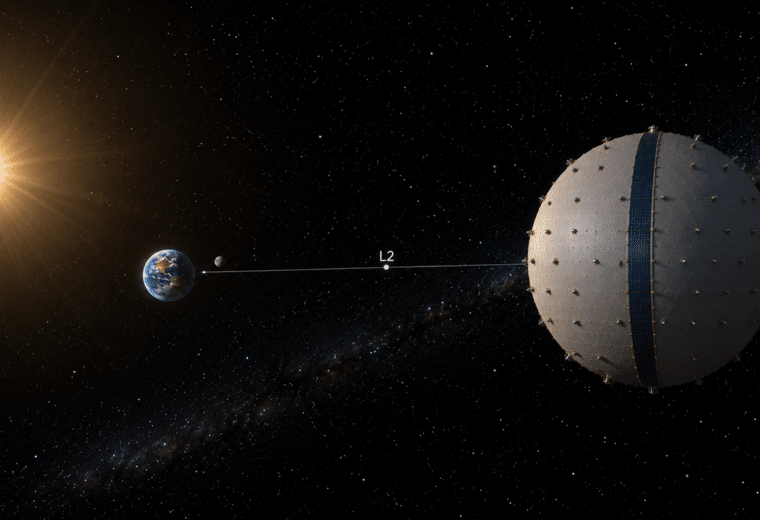
Magnetic random access memory (MRAM – left) is a critical component to many modern technologies and could be a foundational piece of future space-based data centers. Duke researchers Yiran Chen and Helen Li helped lay the foundation for their rise through their labs’ experimental work (right).
They were right.
By 2018, industry giants like TSMC, GlobalFoundries and Samsung were using MRAM technology built on Chen and Li’s foundational work in a wide range of digital devices. It is now the dominant technology for on-chip nonvolatile memory where the data needs to be retained when power is turned off. It has also proved invaluable for AI accelerator design, where large on-chip memory capacity is critical for training and deploying increasingly large AI models.
Another useful feature of MRAM is that it is naturally incredibly resistant to damage and errors caused by radiation in space. With the recent IPO of SpaceX and its ambition to put large data centers in space, many companies are actively exploring the use of MRAM for in-orbit computing applications.
“Our 2008 paper essentially triggered the global investment in MRAM technology at the time,” Chen said. “Now it is already a billion-dollar market that keeps growing by about 20% every year.”
Kip Coonley, a faculty member of mechanical engineering and materials science (MEMS) and electrical and computer engineering (ECE), received a fellowship to create electromechanical teaching aids.
Cookie Consent
This website uses cookies as well as similar tools and technologies to understand visitors' experiences. By continuing to use this website, you consent to Duke University's usage of cookies and similar technologies, in accordance with the Duke Privacy Statement.
Cookie Preferences
Manage your cookie preferences below:
Essential cookies enable basic functions and are necessary for the proper function of the website.
Name
Description
Duration
Cookie Preferences
This cookie is used to store the user's cookie consent preferences.
30 days
Google reCAPTCHA helps protect websites from spam and abuse by verifying user interactions through challenges.
Name
Description
Duration
_GRECAPTCHA
Google reCAPTCHA sets a necessary cookie (_GRECAPTCHA) when executed for the purpose of providing its risk analysis.
179 days
Google Tag Manager simplifies the management of marketing tags on your website without code changes.
Name
Description
Duration
td
Registers statistical data on users' behaviour on the website. Used for internal analytics by the website operator.