
Beyond the Cut: A New Era for CRISPR Medicine
Charles Gersbach and his colleagues are pursuing promising CRISPR technologies focused on controlling gene activity rather than permanently altering the genome.

It’s a tale as old as technology.
A new discovery hits the open marketplace, and the world goes crazy over it. Investments come flooding in as startups seize on the opportunity and established companies rush to grab their piece of the pie.
But science is a slow, painstaking process that takes years—if not decades—to produce a tangible impact on society. After the frenzy wears off, investments pull back, companies go bankrupt and the public becomes disillusioned.
Then, years after the sudden yo-yo, as research slowly progresses and scientists tease out the technology’s true usefulness, steady gains are made. Whether or not the discovery ever lives up to the initial hype is an open question, but its impacts are still felt worldwide.
This phenomenon is known as the Gartner hype cycle. In the 1990s, the boom craze was all about the human genome project. Just over a decade ago, it was self-driving cars. We might be in the middle of an AI hype cycle this very moment.
CRISPR is another technology that experienced this effect. But through a decade of work by thousands of dedicated researchers worldwide, it is now firmly on the so-called “Slope of Enlightenment,” which is where the steady gains are made.
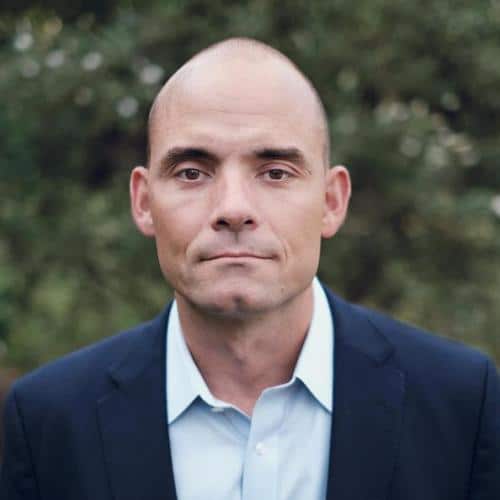
“When you think about it, CRISPR was only shown to work in human cells in 2013, and just a decade later there was an approved CRISPR-based cure for sickle cell disease, one of the worst genetic diseases on the planet,” said Charles Gersbach, a prominent researcher in the field and a longtime Duke Engineering faculty member. “And that’s pretty remarkable, right?”
Building Toward a Boom
In 2012, Emmanuelle Charpentier and Jennifer Doudna announced to the world that they had figured out how to use CRISPR to make precise cuts in any DNA sequence. Originally discovered in bacteria as a viral defense mechanism, the technology could target and break very specific DNA sequences, which is the first step in making changes to genome sequences—also known as gene editing.
CRISPR was so effective in initial laboratory testing that many people expected it to cure dozens if not hundreds of diseases within only a few years. That was the crest of the “Peak of Inflated Expectations” of the Gartner cycle. The biological machinery involved, however, proved difficult to deliver to living cells in patients. And the potential for off-target cuts was sometimes greater than expected, leading to concern over potential negative side effects.
Many CRISPR-based companies soon hit Gartner’s “Trough of Disillusionment.” Would CRISPR ever live up to even a small fraction of its potential?
Today, the answer to that question is a very enthusiastic “yes.” Besides the FDA-approved
treatment for sickle cell disease and beta thalassemia, one needs look no further than Gersbach’s own laboratory to see why researchers in the field are glowing with optimism once again.
“Now, editing technologies are moving beyond just rare inherited disorders,” Gersbach said. “Things like repressing chronic hepatitis B infection, which my startup company is working on, or lowering cholesterol for people at risk for cardiovascular disease. All those clinical trials are underway. And that’s interesting and exciting because we’re talking about therapies for much more common diseases that affect a broad swath of the human population.”
To Cut or Not to Cut
While the public’s eye has long been focused on CRISPR’s potential ability to edit the DNA sequence of the human genome, its true power might be more nuanced than that. Technically, the original discovery of the gene editing technology involves two mechanisms: first, the genetic homing to a specific sequence of DNA, and second, cutting that DNA to initiate gene editing.

The two mechanisms, however, are not entirely interdependent. For example, it is possible to engineer variations of the system that do not make any cuts at all. These versions are a major focus of current efforts in Gersbach’s lab.
Carrying out the genetic instructions contained within DNA is a messy, complicated business. DNA must be copied into messenger RNA, which then carries its blueprints to the cellular machinery that builds proteins. But even the seemingly most straightforward piece of that assembly line—identifying which DNA to copy into RNA—is filled with complexity.
The tens of thousands of genes in our human genome are constantly being dialed up and down in different tissue and cell types, and as we age, adjust to our environment, or respond to disease states or corresponding therapies. To silence the genes that are not being used in a particular cell, large swaths of genetic data can be packaged up tightly in such a way that the machinery that copies it into messenger RNA cannot reach it.
Many disease states, and even the process of aging, are related to dysregulation of the availability or packaging of DNA. The activity of one section of DNA can cause other distant sections to be tucked away or brought forward. The chemical modifications of DNA and the proteins that control its packaging is referred to as the “epigenome.”
Modulating how DNA becomes “promoted” or “repressed” based on these variables is one of Gersbach’s specialties; and CRISPR can be modified to make these alterations with specific intention—known as “epigenome editing.”
“This approach is powerful because you are repurposing the same mechanisms that nature uses to control our genomes. And you’re not actually cutting or altering the DNA itself, so there are fewer risks of permanent side effects,” explained Gersbach. “It could be the best approach to treating these more common disorders.”
Attacking Chronic Hepatitis B
The example out of Gersbach’s lab that is the furthest toward having real-world impact is a treatment for chronic Hepatitis B virus—a serious liver infection caused by a virus that can often be debilitating and even fatal.
As of 2023, the Centers for Disease Control and Prevention estimated that about 640,000 adults in the United States have the condition—a number that is likely to rise if use of the widely adopted vaccine declines in the future. But worldwide, that number is 300 million, and because many people who have it don’t even know it, the disease is easy to spread.
Because Hepatitis B is caused by a virus, creating a version of CRISPR that can seek it out and destroy it may seem like an obvious solution. However, the virus’s genome becomes integrated into our own cells’ DNA many times over and also can be housed in small packages outside of the genome called episomes.

“Breaking a cell’s DNA simultaneously in many different locations is likely to cause problems,” said Gersbach. “When many breaks in DNA occur at the same time, the cell can get confused as to how to stitch the DNA back together again. Additionally, the cell sees these breaks as DNA damage and activates other unwanted defense strategies in response.”
Gersbach’s approach, then, is to use the form of CRISPR his lab is pursuing that instead silences or represses these genes by making them inaccessible to our biomolecular machinery. This is the basis of Tune Therapeutics—a startup company that was launched out of Gersbach’s lab in 2020.
Already, the fledging company has raised more than $220 million in venture capital. And its approach to treating Hepatitis B is already well into a human clinical trial.
“Our preclinical data in mice and monkeys looked great, and we’ve now been in clinical testing for over a year,” Gersbach said. “We’re excited because this treatment has the potential to functionally eradicate the infection, and our approach is the only current one that can silence the viral DNA both inside and outside of the genome.”
“We’re excited because this treatment has the potential to functionally eradicate the infection, and our approach is the only current one that can silence the viral DNA both inside and outside of the genome.”
Charles Gersbach, John W. Strohbehn Distinguished Professor of Biomedical Engineering
More Tools in the Toolbox
This ongoing clinical trial is just the tip of the iceberg of what Gersbach and his colleagues are striving to accomplish with a version of CRISPR that modulates gene activity rather than cutting DNA.
Biomedical engineering has a long history of engineering cells to become specific types of tissue while also improving their performance—a field known as regenerative medicine. Because every cell already carries the genetic instructions needed to become any type of cell—from a light-sensitive retinal cell to an electrically active heart cell—coaxing cells down a specific path with a “defanged” CRISPR platform is an obvious potential use.
Already, Gersbach and his colleagues have demonstrated the ability to use this approach to direct stem cells into neurons and muscle stem cells that regenerate damaged tissue, as well as reprogram T cells of the body’s natural immune system to fight cancer. While others are working on this idea through different means, Gersbach has high hopes for the abilities of this approach to outperform them and move to clinical trials in the near future.
Another prong to his lab’s research is searching the so-called “dark genome” for new therapeutic targets. It has long been known that only one or two percent of the human genome codes for genes that make proteins. The functions of the remaining vast majority mostly remain a mystery. But already, Gersbach’s CRISPR approach is revealing that some of that remaining 98% greatly affect the activity levels of other genes that are important to disease and thus might be good targets for new therapies.
“For example, there is one area of the human genome that is associated with more than 100 diseases, which is by far the most of any one locus,” Gersbach said. “We’re working on a complete functional mapping of the three megabases of that locus. That’s a path we’re going to continue to follow to better understand various diseases and find new drug targets.”

2026 DukEngineer Magazine
Student-written and published annually since the 1940s.