In today’s AI-fueled hiring market, highly desirable internships and jobs are flooded with resumes and cover letters generated in a matter of seconds and tailored specifically to the opening’s posted language. To stand out in that crowd, many engineering students are turning to websites thoughtfully built over time specifically tailored to an individual’s talents and experiences.
“E-portfolios are essentially an extension to a resume, and engineers love them because a website can showcase all of their best projects,” said Becky Simmons, professor of the practice in the Thomas Lord Department of Mechanical Engineering and Materials Science at Duke. “They are a proven asset in nailing an interview and getting a great job.”
E-portfolios are essentially an extension to a resume, and engineers love them because a website can showcase all of their best projects. They are a proven asset in nailing an interview and getting a great job.
Rebecca SimmonsProfessor of the Practice in the Thomas Lord Department of Mechanical Engineering and Materials Science
The tools to build e-portfolios and their style vary widely between students, but they all generally have a few major themes in common. An “about” page delivers the highlights of a resume while turning the information into an actual person rather than simple words on a page. Specialty pages range from details of completed certificates to passion projects that help students further stand out from the crowd.
But the main attraction is the “Projects” page where students can lay out all the various devices, inventions, websites, digital apps and other deliverables that they have created throughout their time at Duke. Details about the steps taken to achieve the desired result, skills used and developed through the process, and critical thinking applied from conception to final product showcase a student’s full range of abilities.
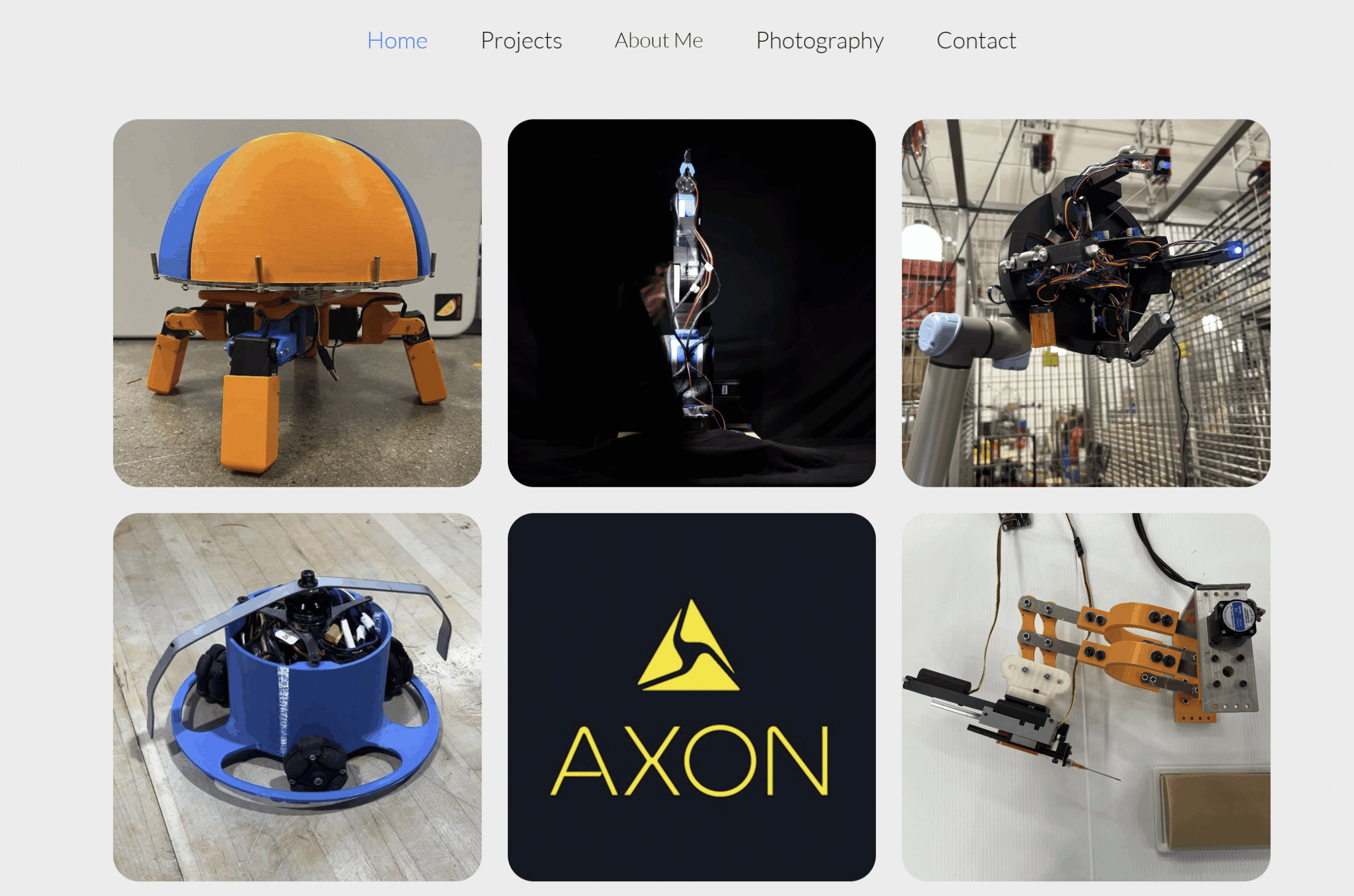
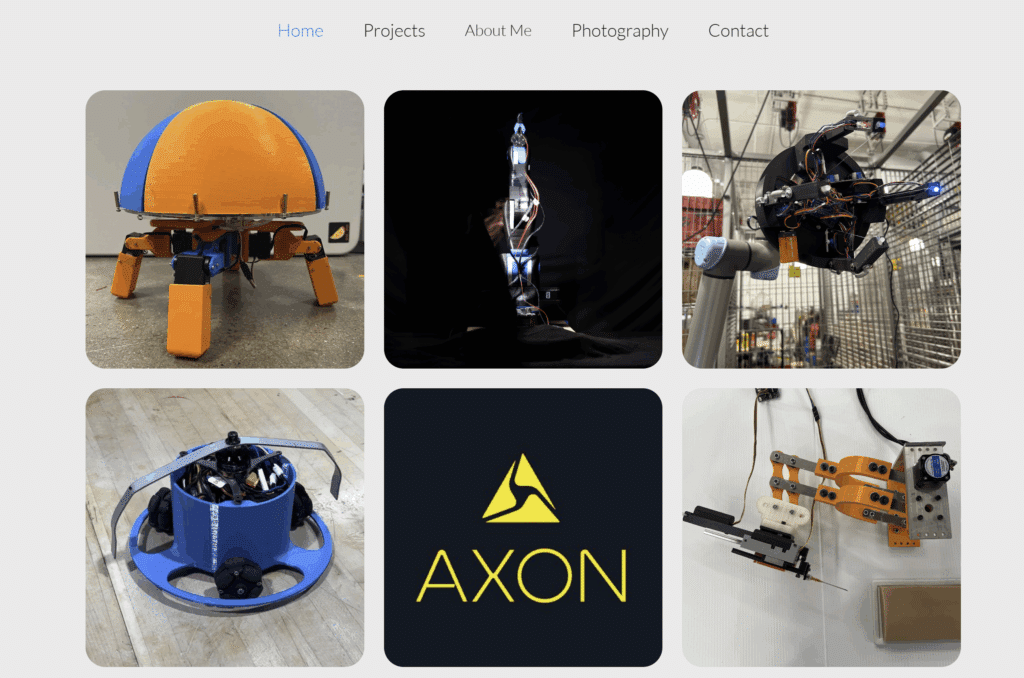
The project page of Richard Kim’s e-portfolio.
“Recruiters like seeing unique e-portfolios,” said Richard Kim, who recently graduated from Duke’s mechanical engineering program and is soon starting a job with Gecko Robotics. “All they do is ask the same questions to students over and over. Whenever I asked if they wanted to talk through my e-portfolio instead, they almost always said yes.”
Over the past few years, the number of Duke undergraduates building e-portfolios has grown quickly. Part of that growth is due to word of mouth. Part of it is due to Simmons being a very vocal proponent of the exercise. But perhaps the biggest reason for their building trend is the technology behind the platforms that host them.
Duke Engineering’s Undergraduate Experience
The Pratt School of Engineering is a highly ranked engineering school in a top 10 research university with a strong liberal arts tradition. That’s a rare and powerful mix.
Richard began his e-portfolio as a sophomore in a simple Google Sites instance. It wasn’t flashy and he didn’t have a lot to put on it, but it was fast and still impressed internship recruiters who were used to seeing PowerPoint slides. As custom-site generators got better and incorporated AI into their workflows, he eventually moved to Webflow, which is great for featuring images and is also free for students.
All [recruiters] do is ask the same questions to students over and over. Whenever I asked if they wanted to talk through my e-portfolio instead, they almost always said yes.
Richard KimDuke ME ’25
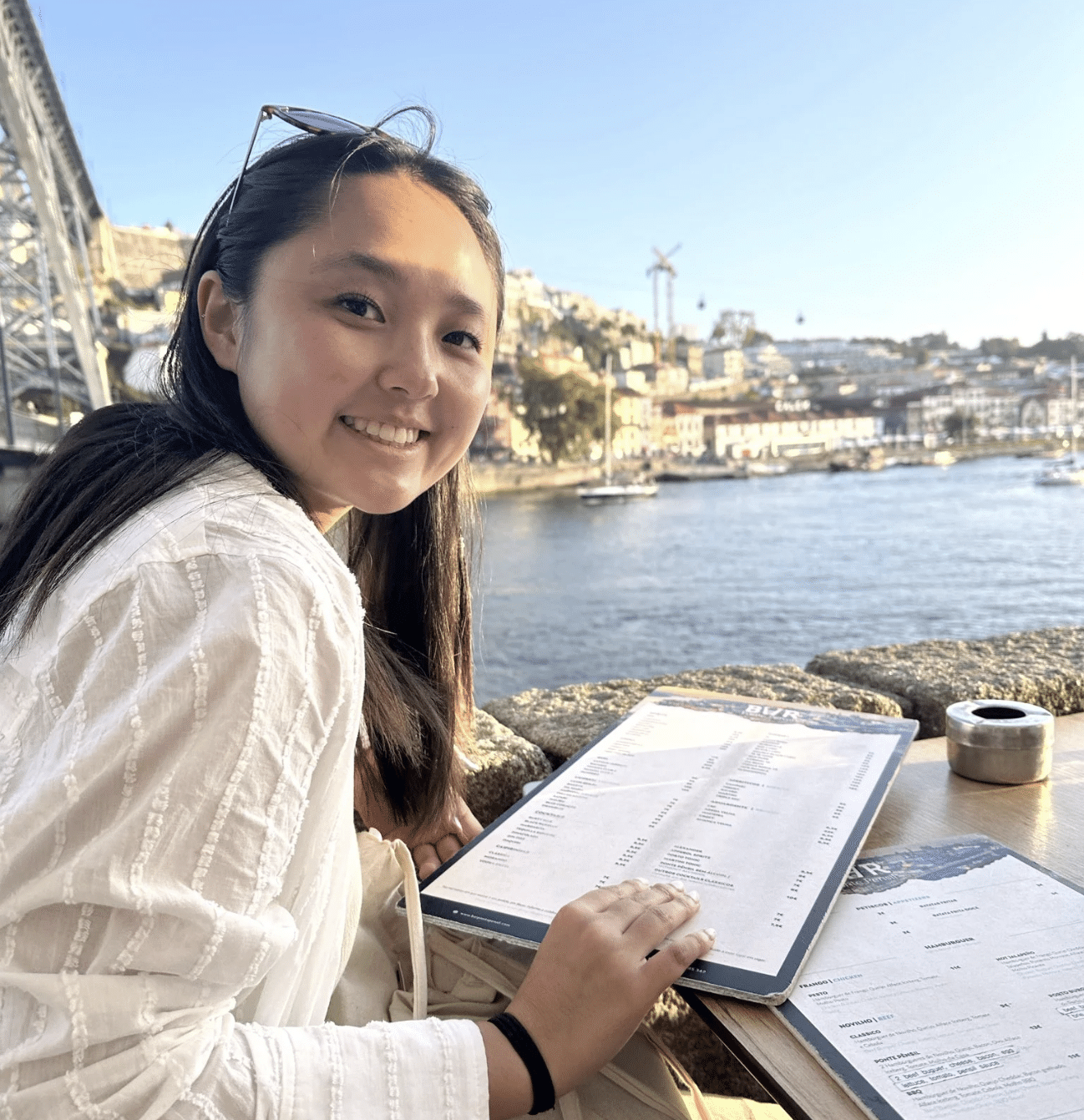
Similarly, Minha Kimstarted her e-portfolio site as little more than photos with captions on a website built with Wix. But by the time she graduated, she had moved to Squarespace, which allowed her to display her materials in a more professional and organized manner.
“Building my e-portfolio was a great exercise for me for interviews,” said Minha, who also recently graduated with a mechanical engineering degree and is entering a global rotational engineering program with IMI. “Even if we didn’t actually look through it during an interview, building it helped me organize my thoughts and figure out how to talk about projects and the skills I built in each of them.”
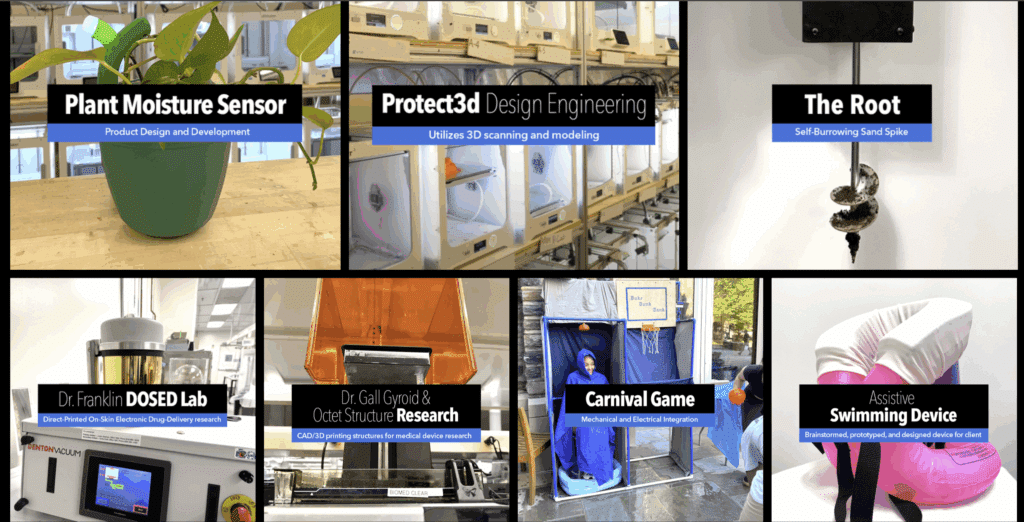
A collection of projects from Minha Kim’s e-portfolio website.
Both Richard and Minha emphasize that it’s never too early to start an e-portfolio. Even if a sophomore’s experience is no match for a graduating senior with a ton of projects to feature, building early and adding on over the years is easier than starting from scratch later on. And starting early will also ensure students remember to take photos and videos to document their projects in a highly visual way from the start.
“It can be intimidating to start at first, but starting is half the battle, and consistency is really important,” Minha added. “I also think it’s important to curate the projects you include to give a sense of what you’re passionate about and what skills you want to highlight. Not having to put absolutely everything you’ve ever done onto the site can take away some of the intimidation factor.”
Building my e-portfolio was a great exercise for me for interviews. Even if we didn’t actually look through it during an interview, building it helped me organize my thoughts and figure out how to talk about projects and the skills I built in each of them.
Minha KimDuke ME ’25
It’s likely good advice, given that both Richard and Minha also won MEMS-based awards for their e-portfolios this past spring; Richard won “Audience’s Favorite” while Minha took home “Content Organization.”
“The showcase contest is really just a way to encourage students to put the effort into building an e-portfolio,” said Simmons, who spearheaded the effort along with Karen Weber, executive director of Duke’s Office of University Scholars and Fellows. “The winners do take home prizes, but the real prizes are all of the job offers I’ve heard about them getting.”
Duke University’s A. James Clark Scholars program provides full tuition and financial aid support to promising students who will develop into tomorrow’s engineering leaders.
The start of the fall 2025 semester took place on a warm August day and was full of friend reunions, smiles and the beginnings of studying.
Cookie Consent
This website uses cookies as well as similar tools and technologies to understand visitors' experiences. By continuing to use this website, you consent to Duke University's usage of cookies and similar technologies, in accordance with the Duke Privacy Statement.
Cookie Preferences
Manage your cookie preferences below:
Essential cookies enable basic functions and are necessary for the proper function of the website.
Name
Description
Duration
Cookie Preferences
This cookie is used to store the user's cookie consent preferences.
30 days
Google reCAPTCHA helps protect websites from spam and abuse by verifying user interactions through challenges.
Name
Description
Duration
_GRECAPTCHA
Google reCAPTCHA sets a necessary cookie (_GRECAPTCHA) when executed for the purpose of providing its risk analysis.
179 days
Google Tag Manager simplifies the management of marketing tags on your website without code changes.
Name
Description
Duration
td
Registers statistical data on users' behaviour on the website. Used for internal analytics by the website operator.