Congenital Heart Disease Mutation Linked to Kidney Damage
Michaela Martinez
11/7/25Pratt School of Engineering
Discovering the link between congenital heart disease and kidney problems could improve outcomes for patients with the disease
SHARE
Congenital Heart Disease Mutation Linked to Kidney Damage
Biomedical engineers at Duke University have shown that a genetic mutation that causes congenital heart disease also contributes to kidney damage and developmental defects. Identifying this early cause of kidney damage could enable clinicians to diagnose and address kidney problems much sooner than current practices allow.
The research appeared November 3 in the journal Nature Biomedical Engineering.
Congenital heart disease (CHD) is a common cause of death in childhood and affects one out of every thousand births. The disease occurs when the heart doesn’t form correctly before birth, causing leaky valves, defective vessels, or holes in the heart. While some cases of CHD can be remedied, children with life-threatening complications often require surgery or even a heart transplant. More than 25 percent of patients also end up developing problems with other organs, which severely compromise life expectancy.
“Research has shown that children diagnosed with CHD almost always have kidney problems by age four,” said Samira Musah, the Alfred M. Hunt Faculty Scholar Assistant Professor of Biomedical Engineering and Assistant Professor of Medicine at Duke University, and the senior author of the study. “Given the shared developmental origin of the heart and kidney, I wondered if a genetic mutation tied to CHD also causes the kidney damage observed in affected patients.”
Research has shown that children diagnosed with CHD almost always have kidney problems by age four. Given the shared developmental origin of the heart and kidney, I wondered if a genetic mutation tied to CHD also causes the kidney damage observed in affected patients.
Samira MusahAlfred M. Hunt Faculty Scholar Assistant Professor of Biomedical Engineering and Assistant Professor of Medicine at Duke University
Musah is well-equipped to answer this question. Her laboratory was among the first to successfully grow functional kidney tissue from stem cells and develop an “organ-on-a-chip” kidney model to investigate these types of issues. This technique is critical, as current diagnostic tools aren’t sensitive enough to catch the small changes in humans during development that could indicate kidney damage.
To pursue her hunch, Musah reached out to Tarsha Ward, a research fellow in the labs of Drs. Christine Seidman and Jonathan Seidman at Harvard Medical School, who works on the genetic mutations that cause CHD. They decided to narrow their focus to CHD cases caused by a mutation to the SMAD2 gene, which the Seidmans’ lab had previously correlated with pediatric and adult heart disease.
“There is an urgent need for continued development of human stem cell models that allow us to investigate the causes of congenital disorders in an integrated way and pave the path toward innovative personalized therapies,” said Ward. “If we can detect heart and kidney defects earlier, we have the chance to change the trajectory of care for children born with congenital heart disease and greatly improve their quality of life.”
In the research, the team generated human induced pluripotent stem cells carrying the SMAD2 mutation, which can be used to study development of any cell type, tissue, and organ in the body. Musah’s laboratory then coaxed them into becoming functional kidney cells and integrated them into an organ-on-a-chip complete with multiple cell types, simulated blood flow and an integrated circuit that recreates the kidney’s blood filtration capabilities.
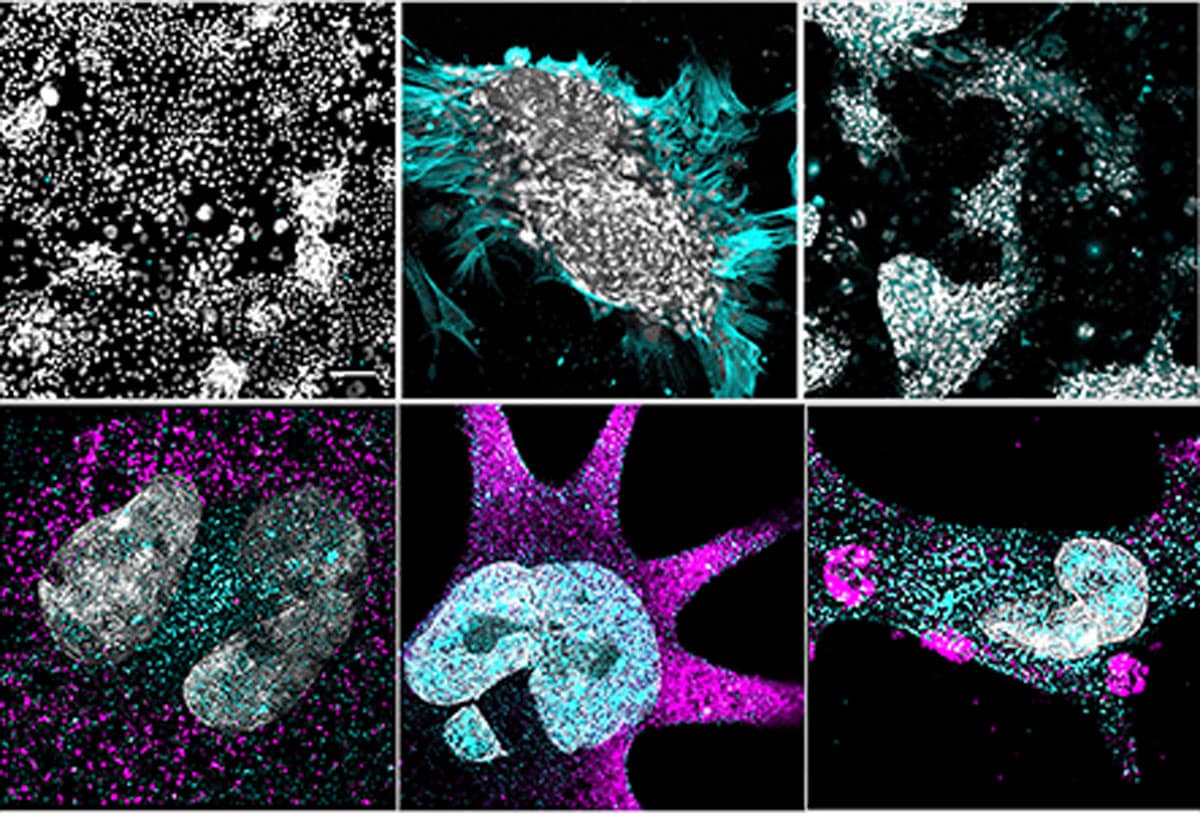
The research showed that the gene mutation caused the cells to organize themselves poorly as they grew into complex tissues. They also saw significant changes in the genes and proteins expressed in the cells, which subsequently influence cellular development, tissue patterning and organ function. These changes were happening so early in tissue development that they conceivably influenced nearly all kidney cell types.
Beyond these initial changes, the team specifically saw problems with podocytes, important cells that help regulate blood filtration in the kidneys. Many of the podocytes failed to effectively branch off and connect with other cells, negatively affecting cell communication and tissue development.
“This is the first and direct human-relevant experimental evidence that kidney damage occurs so early in development,” said Musah.
“Our findings not only enhance understanding of the connection between CHD and kidney problems but also emphasize the urgent need for routine kidney function screening in children with CHD. Reduced kidney filtration is closely associated with a higher risk of death in CHD patients, underscoring the importance of early detection and preventive care,” added Rohan Bhattacharya, the first author of the study and a recent graduate from the Musah Lab.
Moving forward, Musah and her team are using these approaches to discover more early biomarkers of kidney disease. In parallel, they aim to study how kidney cells injured from diseases can be stimulated to help repair damage. One avenue of exploration is to alter stem cells to transform into key kidney cells to help replenish damaged cell populations. They also hope to target gene regulatory networks and work with geneticists to explore SMAD2 mutations as a potential target for future gene therapies.
But for the moment, the researchers say, prevention and early intervention are key.
“There are several ways to address cardiac problems from CHD, but kidney damage is currently not repairable,” said Musah. “If we can develop reliable methods to identify those susceptible to these kidney complications early, we can intervene sooner. Preserving kidney function or halting disease progression is much easier than trying to recover a damaged organ.”
This work was supported by the Whitehead Scholarship in Biomedical Research, a Chair’s Research Award from the Department of Medicine at Duke University, a MEDx Pilot Grant on Biomechanics Biomechanics in Injury or Injury Repair, a Burroughs Wellcome Fund PDEP Career Transition Ad Hoc Award, a Duke Incubation Fund from the Duke Innovation & Entrepreneurship Initiative, a Genentech Research Award, A George M. O’Brien Kidney Center Pilot Grant (P30 DK081943) and NIH Director’s New Innovator Award (DP2DK139544), the Lew’s Predoctoral Fellowship in the Center for Biomolecular and Tissue Engineering (CBTE) at Duke University (T32 Support NIH Grant T32GM800555), the National Heart, Lung, and Blood Institute Pediatrics Cardiac Genomics Consortium (PCGC) investigators (R01 HL151257, 1UM1HL098166), the Ruth L. Kirschstein National Research Service Award (NRSA) T32 Fellowship (2T32 HL 7208-46 A1), Foundation Leducq 16 CVD 03, the Howard Hughes Medical Institute.
S.M. is an inventor on a patent regarding podocyte differentiation held by Harvard University, US20210338736A1. US Patent App 17/366,827, 2021. S.M. is also an inventor on a pending patent application regarding engineered microphysiological systems with in vivo-like tissue structure and function. The other authors declare no conflict of interest.
Rohan Bhattacharya, Tarsha Ward, Titilola Kelajaiye, Alekshyander Mishra, Sophia Leeman, Hamidreza Arzaghi, Jonathan Seidman, Christine Seidman, Samira Musah. “Engineered human induced pluripotent stem cell models reveal altered podocytogenesis in congenital heart disease-associated SMAD2 mutations.” Nature Biomedical Engineering. November 3, 2025.://doi.org/10.1038/s41551-025-01543-0
Cookie Consent
We use cookies to improve your experience on our site. By using our site, you consent to cookies.
Cookie Preferences
Manage your cookie preferences below:
Essential cookies enable basic functions and are necessary for the proper function of the website.
Name
Description
Duration
Cookie Preferences
This cookie is used to store the user's cookie consent preferences.
30 days
Google reCAPTCHA helps protect websites from spam and abuse by verifying user interactions through challenges.
Name
Description
Duration
_GRECAPTCHA
Google reCAPTCHA sets a necessary cookie (_GRECAPTCHA) when executed for the purpose of providing its risk analysis.
179 days
Google Tag Manager simplifies the management of marketing tags on your website without code changes.
Name
Description
Duration
td
Registers statistical data on users' behaviour on the website. Used for internal analytics by the website operator.