
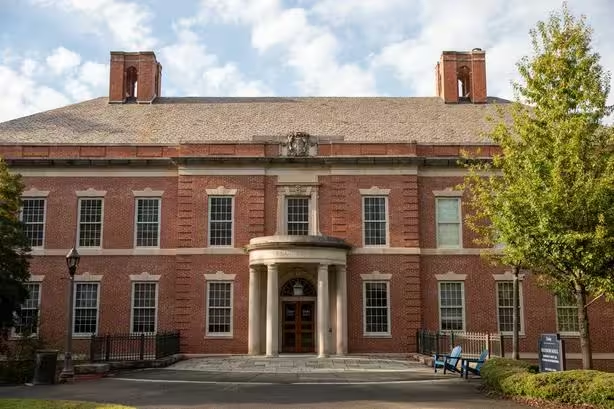
Busting the 5 Biggest Myths About Renewable Energy
Doug Nowacek dispels the myth that ocean wind farms are a major source of harm to whales and other wildlife.
This is a moment of possibility.
A more resilient, sustainable planet depends on engineering solutions that meet the demands of a growing population and a resource-constrained world. Whether transforming renewable energy, pioneering carbon capture technologies, or designing circular economic solutions to build a healthier planet, Duke Engineering can leverage this moment to lead transformational change across scientific fields, industries, and communities.
Building on a century of innovation in foundational areas like geomechanics, computational modeling, and environmental systems, we’re developing new human-centered technologies to shape a sustainable future. At Duke, we’re focused on technologies that strengthen ecosystems, serve communities, and protect the planet’s future.
This includes work in developing a sustainable power grid and advancing next-generation carbon capture and conversion technologies. We’re also designing smarter infrastructure using digital twin modeling and supporting student- and faculty-led ventures that strengthen local communities, promote shared prosperity, and foster sustainable economic growth.
These efforts grow stronger through collaboration with faculty across disciplines, policy leaders, industry partners, and local communities. Together, we’re turning promising ideas into progress that lasts and that matters to the people and places it reaches.
We also know that preparing future engineers requires more than technical know-how. Our students graduate with climate fluency, a strong ethical compass, and the ability to work across fields and cultures. Through hands-on experience, they develop the confidence and context to turn complexity into clarity—and ideas into real impact—hallmarks of a Duke education.
At Duke Engineering, we’re investing in people, partnerships, and research to help society imagine—and realize—a sustainable future. And we’re doing it in ways that are smart, inclusive, and built to last.
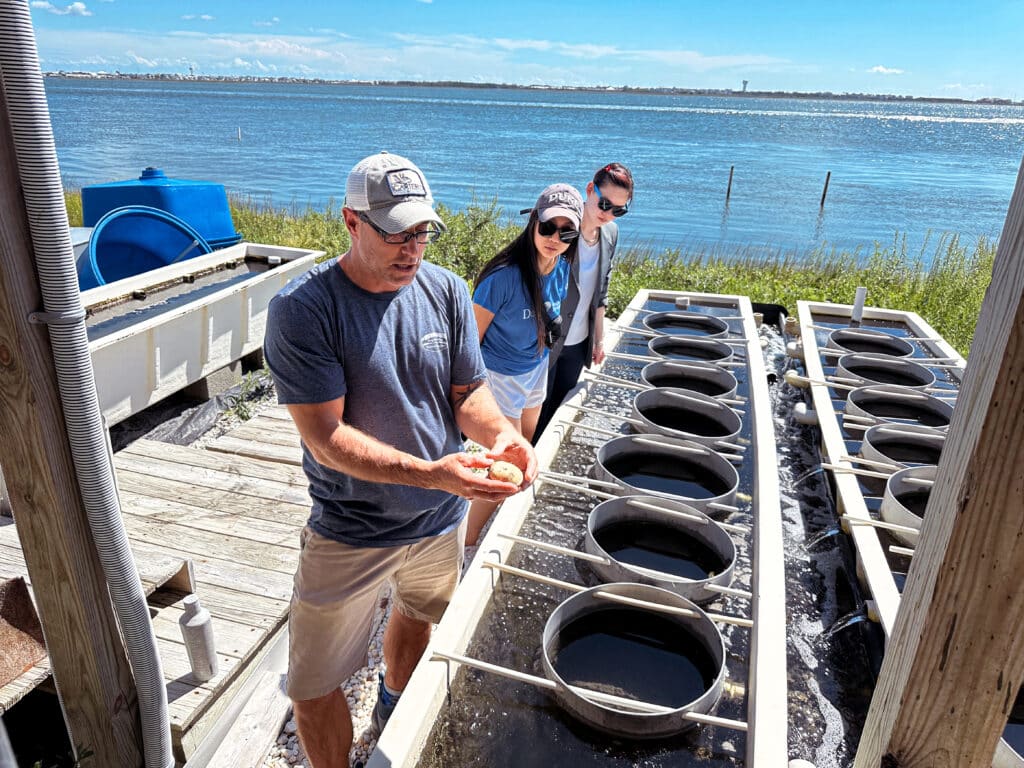
Leaders from industries as diverse as insurance and manufacturing share a common need—graduates prepared to tackle sustainability in practical ways. In response, we built the Master of Climate and Sustainability Engineering program.
From student-launched startups developing “Fitbit-style” sensors for coastal water health to innovative ideas like turning car lots into productive solar energy sites, students master how to run and scale ventures built around social, economic, and environmental impact. They learn to design triple-bottom-line businesses that consider not just clients, but also communities. They learn to navigate policy, secure financing, and communicate clearly whether with technical experts, stakeholders, or the general public—equipping them to drive sustainable change across industries.

The New York Climate Exchange is a $700 million living-learning hub for environmental solutions—and Duke is proud to be part of it. As a coastal state, North Carolina knows firsthand the challenges of climate change. That perspective drives our commitment to this ambitious, action-oriented partnership.
Together with researchers, policymakers, industry experts, and community leaders around the world, we’re working to accelerate climate innovation across disciplines and regions. By keeping accessibility and inclusion at the heart of the effort, we’re building solutions that serve communities everywhere.
In eastern North Carolina, rates of ALS are so high that it can no longer be called a rare disease. Could the ever-greener-waters colored by neurotoxin-releasing algal blooms be to blame? Visit this close-knit community as researchers work to reclaim their gorgeous home from fear and uncertainty.
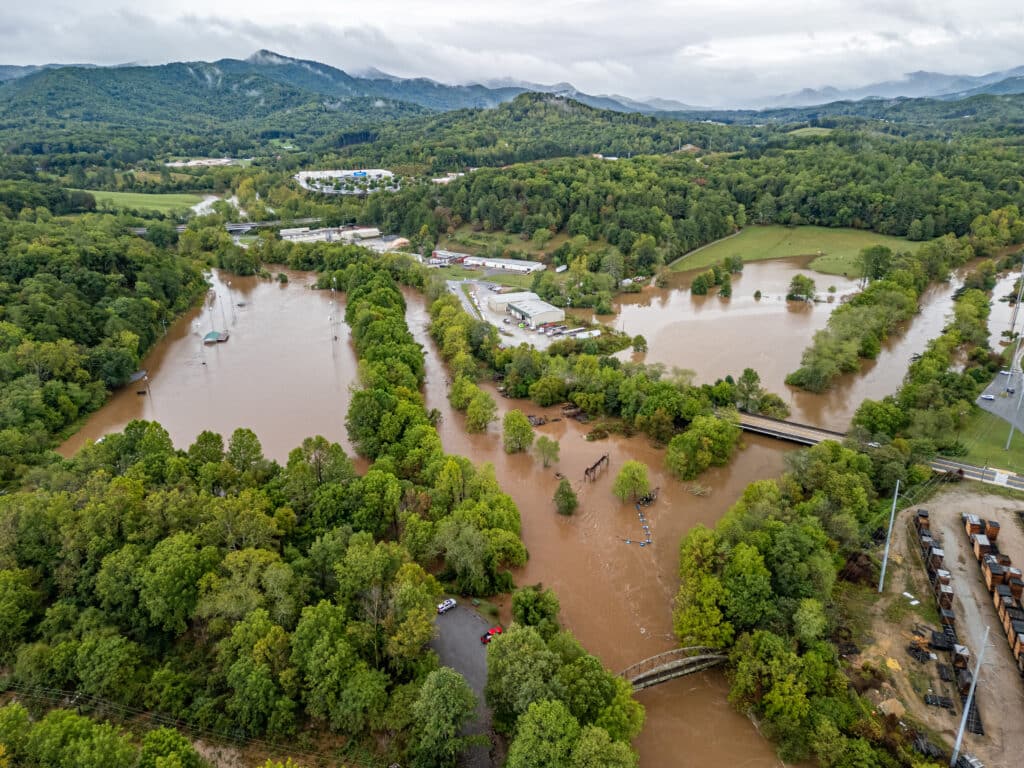
As climate events grow more frequent and severe, insurance companies are retreating from high-risk regions—often communities that need help the most.
Duke’s Center for Innovation in Risk, Catastrophes, and Decisions (CIRCAD) partners with industry and policymakers to rethink insurance and risk strategies. We create models that protect vulnerable communities, ensuring insurance remains accessible to everyone, everywhere.
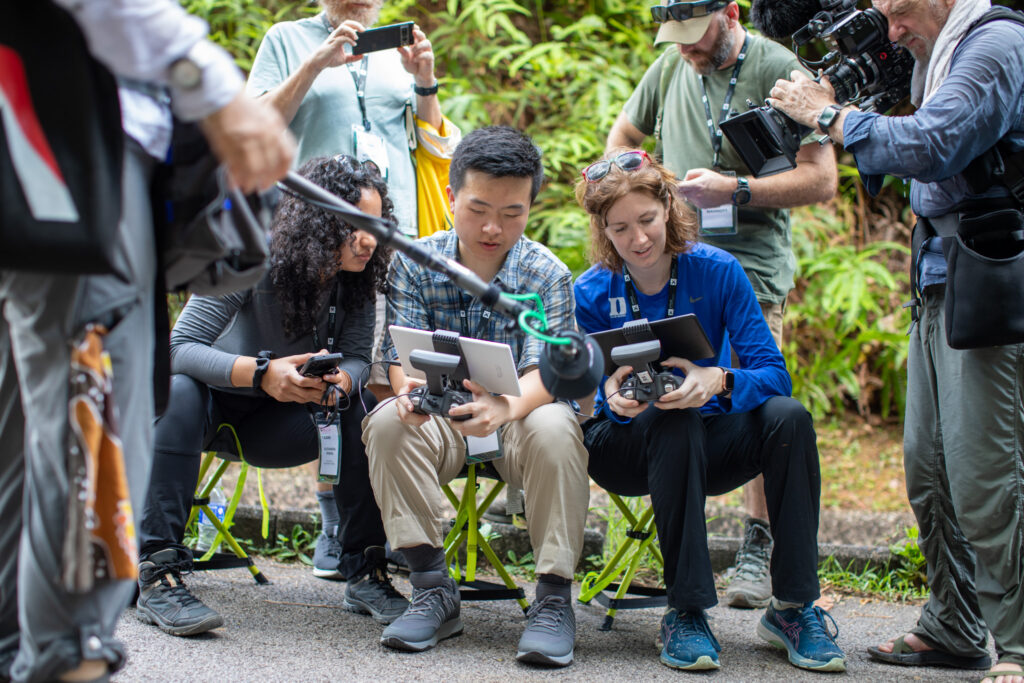
Solving global challenges with international companies might intimidate some, but our students embrace it at Duke. Interdisciplinary teams engage annually in ambitious, multi-year projects aimed at solving challenges posed by various XPRIZE competitions. Whether mapping ocean floors or documenting rainforest biodiversity through autonomous drones, students gain hands-on skills, teamwork experience, and global exposure—proving there’s no limit to what we can achieve together.
Doug Nowacek dispels the myth that ocean wind farms are a major source of harm to whales and other wildlife.

The mechanics of how water and carbon dioxide move in and out of plants greatly affects how trees grow in a carbon-dioxide-enriched environments.

The Duke Climate Collaboration Symposium explored the history of geothermal energy at Duke and accelerate its use along the East Coast.