
David Smith Selected for NASA NIAC Fellowship
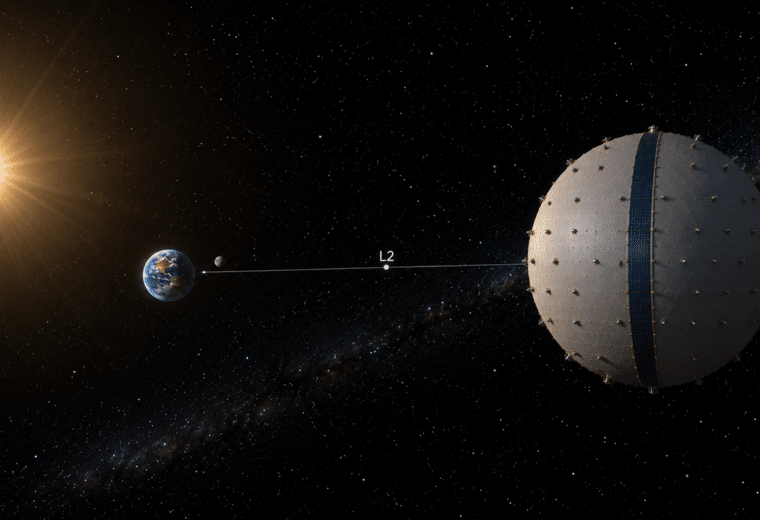
Award will support the pursuit of robotically assembled metamaterials in space for radar systems enabling long-range situational awareness.
Mikkelsen was recognized for her work in nanophotonics and plasmonic systems.

Maiken Mikkelsen, the James N. and Elizabeth H. Barton Associate Professor of Electrical and Computer Engineering, has been elected a fellow of Optica for contributions to the understanding of light-matter interactions and ultrafast emission dynamics in plasmonic systems.
Mikkelsen joined the Duke Engineering faculty in 2012 and focuses her research on exploring nanophotonics and new quantum materials to enable transformative breakthroughs for optoelectronics, quantum science, the environment and human health.
Mikkelsen is leading a $7.5 million grant through the Department of Defense’s Multidisciplinary University Research Initiative (MURI) to develop a “super camera” that captures just about every type of information that light can carry, such as polarization, depth, phase, coherence and incidence angle. Mikkelsen is also leading a $3.4 million research project (R01) from the National Institutes of Health (NIH) to apply her advances in nanophotonics for point-of-care detection of cardiac biomarkers by smartphone.
Previous awards include the Maria Goeppert Mayer Award from the American Physical Society, NSF CAREER award, the Moore Inventor Fellow award from the Gordon and Betty Moore Foundation, and young investigator program awards from the Office of Naval Research, the Army Research Office and the Air Force Office of Scientific Research.
Optica is a global enterprise dedicated to promoting technical, scientific, and educational knowledge in optics and photonics. The designation of fellow is a prestigious honor, as no more than 10 percent of Optica’s total membership may be elected as fellows.
Award will support the pursuit of robotically assembled metamaterials in space for radar systems enabling long-range situational awareness.

Research co-authored by Michael Reiter has received the 2026 Test of Time award from the USENIX Security Symposium.

Five honors from ACM and IEEE groups highlight Duke ECE leaders’ lasting influence on AI hardware research.