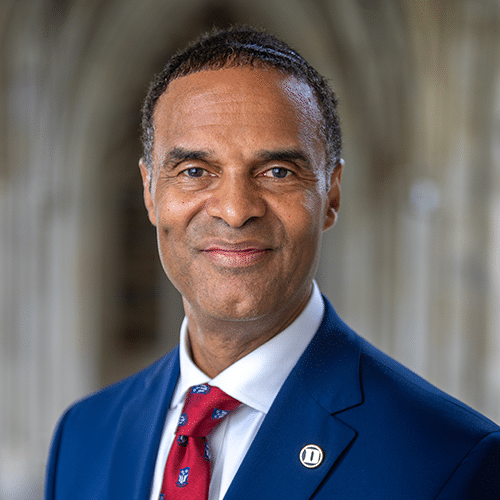
Duke’s Ashutosh Chilkoti Elected to the National Academy of Medicine
Michaela Martinez
10/19/26Awards6 min read
Chilkoti was recognized for pioneering work spanning drug delivery, protein purification and point of care diagnostic technologies
SHARE
Duke’s Ashutosh Chilkoti Elected to the National Academy of Medicine
Ashutosh Chilkoti, the Alan L. Kaganov Distinguished Professor of Biomedical Engineering, has been elected to the U.S. National Academy of Medicine (NAM). Election to the Academy is considered one of the highest honors in the fields of health and medicine and recognizes individuals who have demonstrated outstanding professional achievement and commitment to service.
Chilkoti was recognized for pioneering artificial polypeptides for sustained delivery of protein drugs, developing a method to purify protein drugs and viral vectors without chromatography, creating innovative point-of-care diagnostics and advancing next-generation PEGylation technology designed to avoid immune responses associated with conventional PEG-based drug delivery.
“Ashutosh Chilkoti’s election to the National Academy of Medicine reflects the extraordinary reach and impact of his research, which bridges fundamental scientific discovery and real-world advances in health care,” said Alec Gallimore, provost of Duke University, chief academic officer and the Alfred J. Hooks E ’68 Distinguished Professor of Mechanical Engineering and Materials Science. “His achievements exemplify Duke’s commitment to research that pushes the boundaries of knowledge while addressing some of society’s most pressing challenges.”
“Tosh’s work exemplifies how engineering research can move beyond a lab to address some of our most important medical challenges, whether it’s developing new approaches to drug delivery and cancer treatment to creating more accessible diagnostic tools,” said Jerry Lynch, the Vinik Dean for Engineering at the Pratt School of Engineering at Duke. “Tosh has made meaningful, significant advancements to the field of biomedical engineering, and we are proud to celebrate this well-deserved recognition.”
Ashutosh Chilkoti’s election to the National Academy of Medicine reflects the extraordinary reach and impact of his research, which bridges fundamental scientific discovery and real-world advances in health care
Alec GallimoreProvost at Duke University
Chilkoti’s research operates at the intersection of protein engineering, polymer chemistry, materials science and medicine to create materials and tools with applications ranging from biomaterials for drug delivery and cancer treatment to clinical diagnostics and biopharmaceutical manufacturing.
The Academy’s citation recognizes Chilkoti for inventing a method to purify protein drugs and viral vectors without chromatography, a widely used technique for separating and purifying biological molecules. His approach offers an alternative to a conventional step in the manufacturing of biologic medicines and gene therapy products.
Chilkoti was also recognized for leading the development of elastin-like polypeptides (ELPs), long, disordered proteins whose behavior can be tuned to respond to environmental conditions such as temperature and acidity. These properties make them useful for drug delivery, protein purification and the development of injectable biomaterials.
Tosh’s work exemplifies how engineering research can move beyond a lab to address some of our most important medical challenges, whether it’s developing new approaches to drug delivery and cancer treatment to creating more accessible diagnostic tools
Jerry LynchVinik Dean of Engineering
In 2026, Chilkoti and his collaborators developed an ELP-based approach for delivering GLP-1 medications orally. In research that appeared in Cell Biomaterials, the team showed that their formulation could protect protein-based drugs from destruction in the stomach and release them in the intestines. In tests in mice, a GLP-1 drug delivered using this method worked just as well as the injected version at reducing weight, even when the animals had access to high calorie food. The technique could be useful for other pharmaceuticals based on peptides such as insulin or treatments for irritable bowel syndrome, HIV and osteoporosis.
Chilkoti was further recognized for his development of a next-generation alternative to PEGylation, a widely used technique that attaches polyethylene glycol (PEG) to therapeutic proteins and other biological drugs to help them remain in the bloodstream longer. Although effective, conventional PEG can trigger immune responses in some patients. Chilkoti’s team designed a branched, PEG-like polymer that could break up the longer ethylene glycol sequences into shorter chains, making it less recognizable to the immune system.
Chilkoti’s expertise in polymer chemistry has also led to the development of the D4 assay, an ultrasensitive point-of-care testing platform that can measure multiple disease-related biomarkers from a small drop of blood. The technology uses specialized polymer coatings that prevent unwanted proteins from sticking to the test surface, helping clinicians detect biomarkers even in complex samples such as whole blood. Designed to simplify testing outside traditional laboratory settings, the platform could help expand access to diagnostic tools in clinics and other resource-limited environments.
Chilkoti’s research has provided the foundation for several startups, including Sentilus, acquired by Immucor in 2014; PhaseBio Pharmaceuticals, which went public on NASDAQ in 2018; and Isolere Bio, acquired by Donaldson in 2023. His work also underpins three active startups: InSoma Bio, Veil Therapeutics and SimplusDx.
Tosh’s election to the National Academy of Medicine is a wonderful recognition of his creativity, scientific leadership, and enduring contributions to biomedical engineering. The election citation lists no less than four distinctive contributions, highlighting Tosh’s broad and diverse impact on human health. We are incredibly proud to see his work recognized at this level
Sharon GerechtPaul M. Gross Distinguished Professor and chair of Duke BME
Chilkoti joined Duke University’s Biomedical Engineering Department in 1996, and he served as chair of Duke BME from 2014-2022, where he oversaw significant growth of the department and a jump in global recognition.
“Tosh’s election to the National Academy of Medicine is a wonderful recognition of his creativity, scientific leadership, and enduring contributions to biomedical engineering,” said Sharon Gerecht, the Paul M. Gross Distinguished Professor and chair of Duke BME. “The election citation lists no less than four distinctive contributions, highlighting Tosh’s broad and diverse impact on human health. We are incredibly proud to see his work recognized at this level.”
Chilkoti is a fellow of the National Academy of Inventors, the American Institute for Medical and Biological Engineering, the Biomedical Engineering Society, the Royal Society of Chemistry and the American Association for the Advancement of Science.
Established originally as the Institute of Medicine in 1970 by the National Academy of Sciences, the National Academy of Medicine addresses critical issues in health, science, medicine, and related policy and inspires positive actions across sectors. NAM works alongside the National Academy of Sciences and National Academy of Engineering to provide independent, objective analysis and advice to the nation and conduct other activities to solve complex problems and inform public policy decisions.
Chilkoti is one of 100 new members elected to NAM this year. Members are elected by their peers and contribute their expertise to the Academy’s work addressing critical challenges in health, medicine and public policy.
“I am deeply honored by my election to the National Academy of Medicine,” said Chilkoti. “This recognition belongs equally to the many outstanding trainees, past and present, in my group, and I am humbled to join the Academy’s members, whose work I have long admired.”
I am deeply honored by my election to the National Academy of Medicine. This recognition belongs equally to the many outstanding trainees, past and present, in my group, and I am humbled to join the Academy’s members, whose work I have long admired.
Ashutosh ChilkotiAlan L. Kaganov Distinguished Professor of Biomedical Engineering
Cookie Consent
This website uses cookies as well as similar tools and technologies to understand visitors' experiences. By continuing to use this website, you consent to Duke University's usage of cookies and similar technologies, in accordance with the Duke Privacy Statement.
Cookie Preferences
Manage your cookie preferences below:
Essential cookies enable basic functions and are necessary for the proper function of the website.
Name
Description
Duration
Cookie Preferences
This cookie is used to store the user's cookie consent preferences.
30 days
Google reCAPTCHA helps protect websites from spam and abuse by verifying user interactions through challenges.
Name
Description
Duration
_GRECAPTCHA
Google reCAPTCHA sets a necessary cookie (_GRECAPTCHA) when executed for the purpose of providing its risk analysis.
179 days
Google Tag Manager simplifies the management of marketing tags on your website without code changes.
Name
Description
Duration
td
Registers statistical data on users' behaviour on the website. Used for internal analytics by the website operator.