

Quantum Device Simulates Matter Popping into Existence
A new study from the Duke Quantum Center demonstrates the ability to conduct experiments related to the Big Bang and high-energy physics.
A new study from the Duke Quantum Center demonstrates the ability to conduct experiments related to the Big Bang and high-energy physics.

The five-year renewal will focus on developing an AI-native edge stack that supports autonomous interaction among users, agents and the physical environment, integrated with national-priority technologies such as quantum computing.

The six-year industry-academia-federal project will combine several emerging technologies to develop the tools and playbook needed to master the next evolution of electronic warfare.

As AI data centers become larger and more powerful, they consume vast amounts of electricity and water, raising critical questions: Can AI become more sustainable? Could it actually help address climate change?
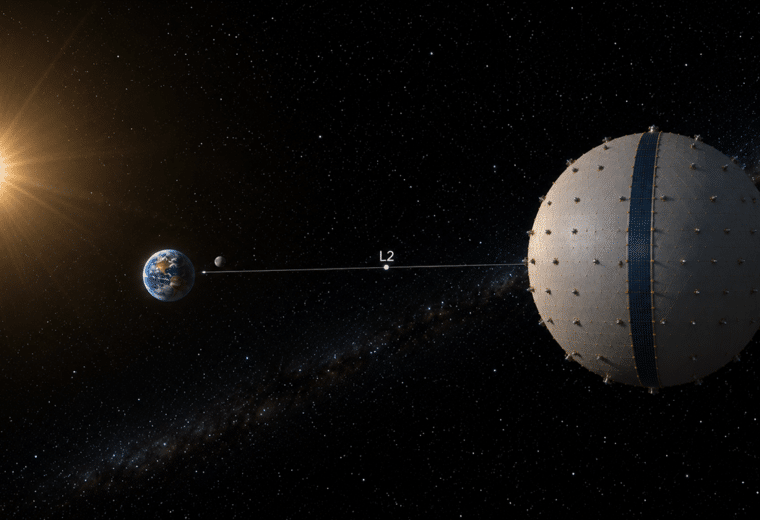
Award will support the pursuit of robotically assembled metamaterials in space for radar systems enabling long-range situational awareness.

Every day, AI tools get more capable, and deployment is outpacing our understanding of what they get wrong. Duke Engineering Dean Jerry Lynch connects with three Duke University experts to break down where that gap is already showing up: in cybersecurity, in the everyday AI tools people use to get advice, and in healthcare.
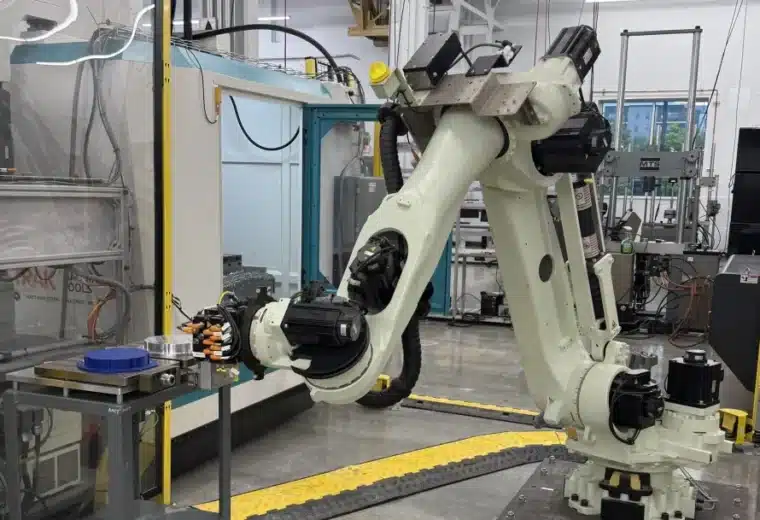
Over a decade of work from the laboratory of Stefano Curtarolo will help researchers discover new materials through Georgia Tech’s new $18.1 million Programmable Cloud Laboratory.

Duke engineers are leading a Phase 1 Genesis project funded by the Department of Energy to develop an AI platform capable of designing large-scale DNA-based materials for next generation energy technologies.
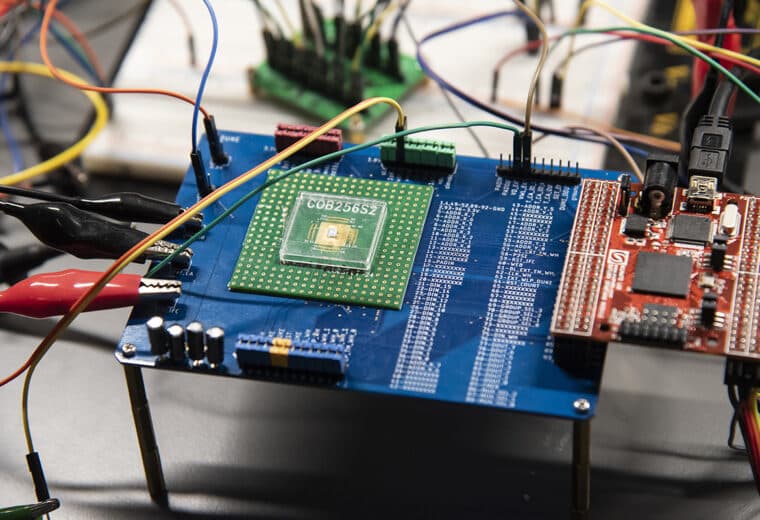
Duke engineers are leading a Phase 1 Genesis project funded by the Department of Energy to develop robotic AI processing hardware 10x faster and 100x more efficient than today’s top performers.

An academic-industry collaboration identifies 1% of resumes in a 200,000 sample across multiple sectors as containing concealed instructions meant to exploit AI systems.

Recent Duke ECE graduate will study redox-flow batteries at the Laboratory of Nanoscience for Energy Technologies in Lausanne, Switzerland with support from the prestigious award.

Yiran Chen and Helen Li have won the A. Richard Newton Technical Impact Award for their foundational research on magnetic random access memory (MRAM).