

Looking Beyond the Invisibility Cloak
After a major metamaterials breakthrough, David Smith learned how to turn promising research into real-world applications.
After a major metamaterials breakthrough, David Smith learned how to turn promising research into real-world applications.

Natalia Litchinitser's lab will establish new ways for controlling structured light and electromagnetic radiation as part of a multi-university collaboration.

A $4.1 million U.S. National Science Foundation (NSF) project will develop more resilient wireless networks that could help emergency responders restore communications, assess changing conditions in real time and navigate disaster zones.

In the Duke Engineering Physical AI series, Maria Gorlatova explores how augmented reality could guide people through real-world tasks and how her research aims to catch mistakes before harm.

In the Duke Engineering Physical AI series, Yiran Chen explains what it will take to make robots and other smart machines powerful, efficient and trustworthy enough to operate without relying on the cloud.

In the Duke Engineering Physical AI series, Boyuan Chen considers how robots that learn from experience could adapt to situations their designers never anticipated and why they must also learn when to ask for help.

In the Duke Engineering Physical AI series, Miroslav Pajic makes the case for building security into autonomous vehicles and drones from the start.

A new study from the Duke Quantum Center demonstrates the ability to conduct experiments related to the Big Bang and high-energy physics.

The five-year renewal will focus on developing an AI-native edge stack that supports autonomous interaction among users, agents and the physical environment, integrated with national-priority technologies such as quantum computing.

The six-year industry-academia-federal project will combine several emerging technologies to develop the tools and playbook needed to master the next evolution of electronic warfare.

As AI data centers become larger and more powerful, they consume vast amounts of electricity and water, raising critical questions: Can AI become more sustainable? Could it actually help address climate change?
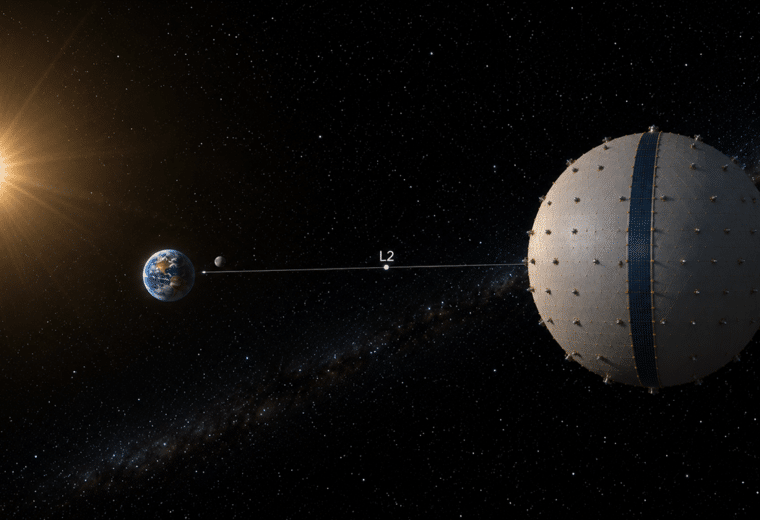
Award will support the pursuit of robotically assembled metamaterials in space for radar systems enabling long-range situational awareness.